
Excitoxicity Sweeps The Summer Game Jam 2026
"Excitoxicity" sweeps the summer game jam 2026
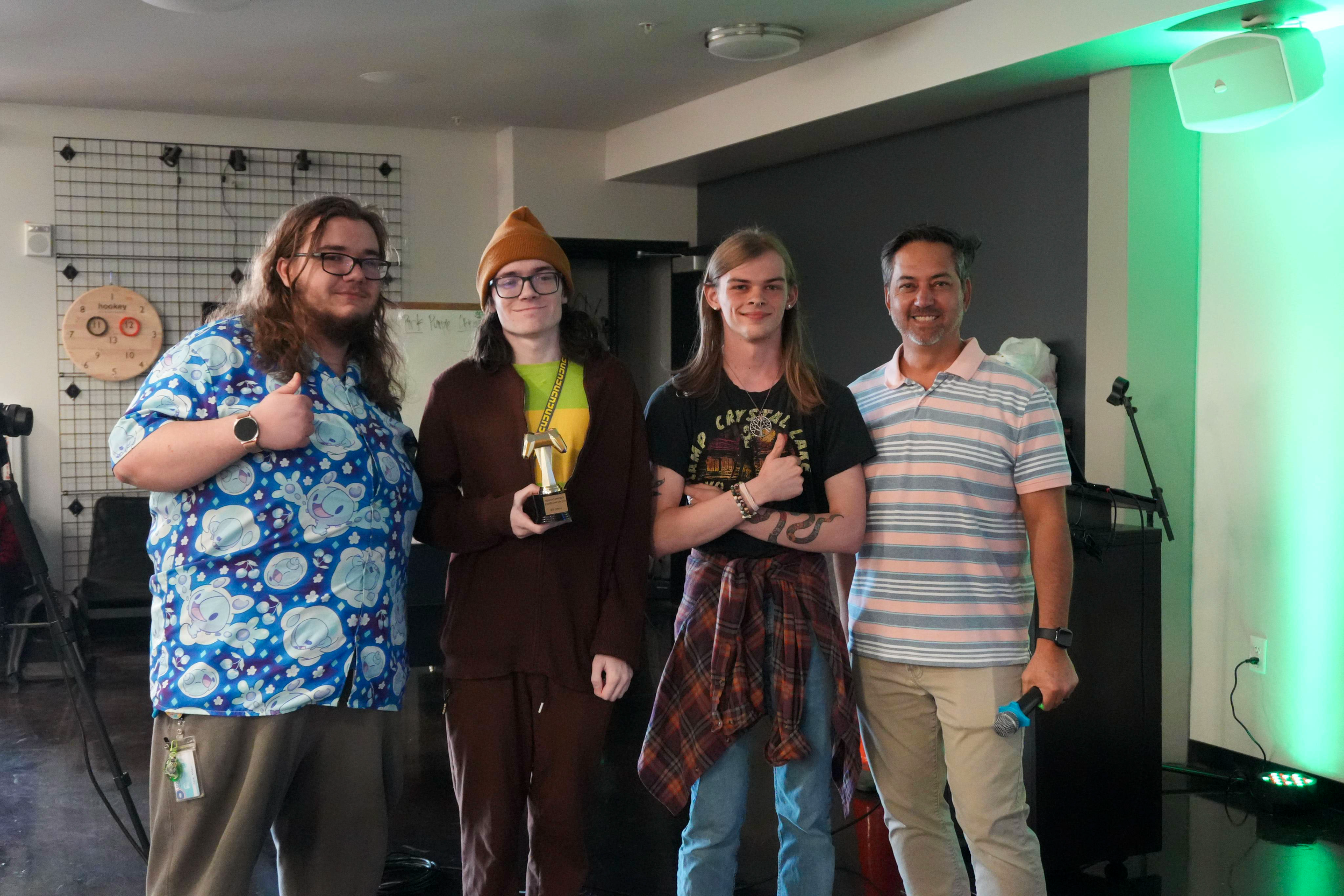
One weekend, one surprise theme, and just 72 hours to build a playable game from scratch.
That was the challenge for our students participating in this year’s Summer Game Jam, hosted by Professor Raymond Maple, Chair Neumont’s Software and Game Development degree. When the final awards were announced, one game had swept every category: Excitoxicity.
Created by Game Development students Jack Nolan, Eris Flanagan, and Benjamin Haroldsen, the fast-paced game puts players in control of a neuron navigating a brain during a panic attack. Its inventive premise, polished visuals, and energetic gameplay showcased what a focused team can accomplish under pressure.
Fittingly, the idea began with a moment of genuine pre-jam stress.
“Ben was panicking and trying to get the repository and files set up,” Jack said. “Eris made a joke about Ben having a panic attack over it, and we all collectively went, ‘This will work.’”
From that joke came the central idea: What if a player were a neuron inside someone’s brain, working to help them calm down? The team found an empty classroom, claimed a whiteboard, and started brainstorming. According to Flanagan, the first words on the board were simply “Panic Attack.” From there, they crossed out weaker concepts and developed the ideas that stuck.
Within the first few hours, the team had a clear direction for Excitoxicity. Players control a neuron that uses its tail as a grappling hook to move quickly through the brain. Each level challenges the player to grapple between gland cells, bounce off walls, avoid enemies and race against a timer. The goal is to reach the part of the brain connected to eyesight, helping the person “snap back into reality.”
The timer also adds a memorable twist. If players run out of time, they are overwhelmed by a swarm of enemies, around 300, according to Haroldsen. “We thought that was a funny thing to add,” he said.
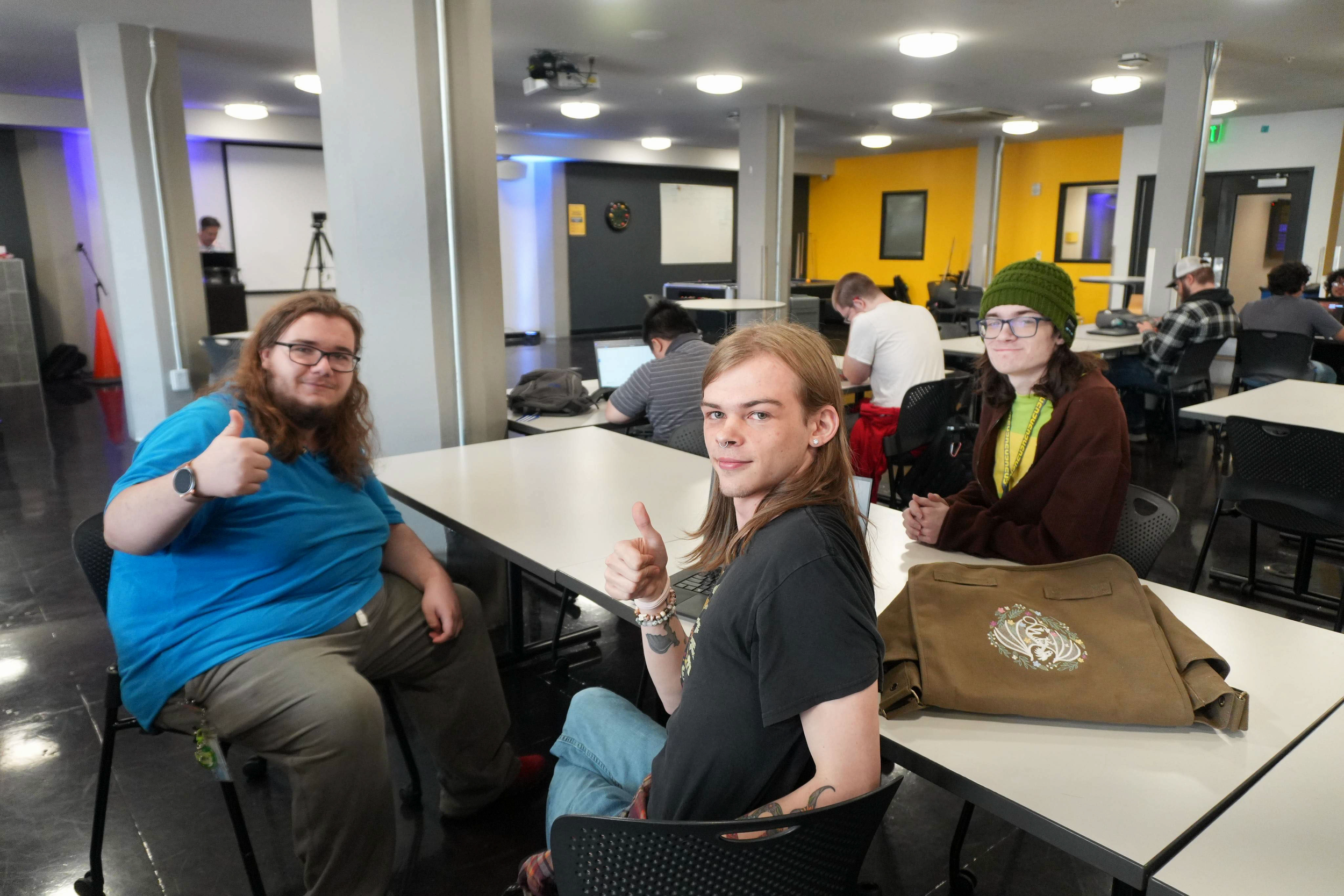
Behind the creative concept was a practical production strategy. With only 72 hours available, the team prioritized a complete, cohesive experience over an oversized list of features. An early plan called for as many as 16 levels, but they scaled the final game to 12, so the team had time to refine what they built.
The work was divided according to each member’s strengths. Haroldsen established the project and led systems programming, developing major mechanics such as grapple points, digestive enzymes and interactive bouncy objects. Flanagan took the lead on level design, game feel and planning, while also creating wall and enemy sprites. Jack focused on the user interface and art, designing the game’s logo, main-menu background, and level select screen.
The team used Godot 4.7 to build Excitoxicity, Aseprite to create pixel art, and GitHub to manage version control and collaboration. Their experience with the tools helped them move quickly, though working in a team had its own learning curve.
For Jack, this was his first game jam. For the other two teammates, it was their first time completing a game jam together. Coordinating GitHub pushes, communicating ideas clearly and avoiding conflicts between files required careful planning throughout the weekend.
“Working in a team and coordinating stuff was a challenge at first,” Flanagan said. “But in the end this game wouldn’t have existed without all of us working on it.”
As the deadline approached, sleep became scarce. Flanagan estimated that the team slept only three to four hours during the final day and a half. Even then, they continued reviewing one another’s work, sharing feedback, and stepping in wherever the game needed help.
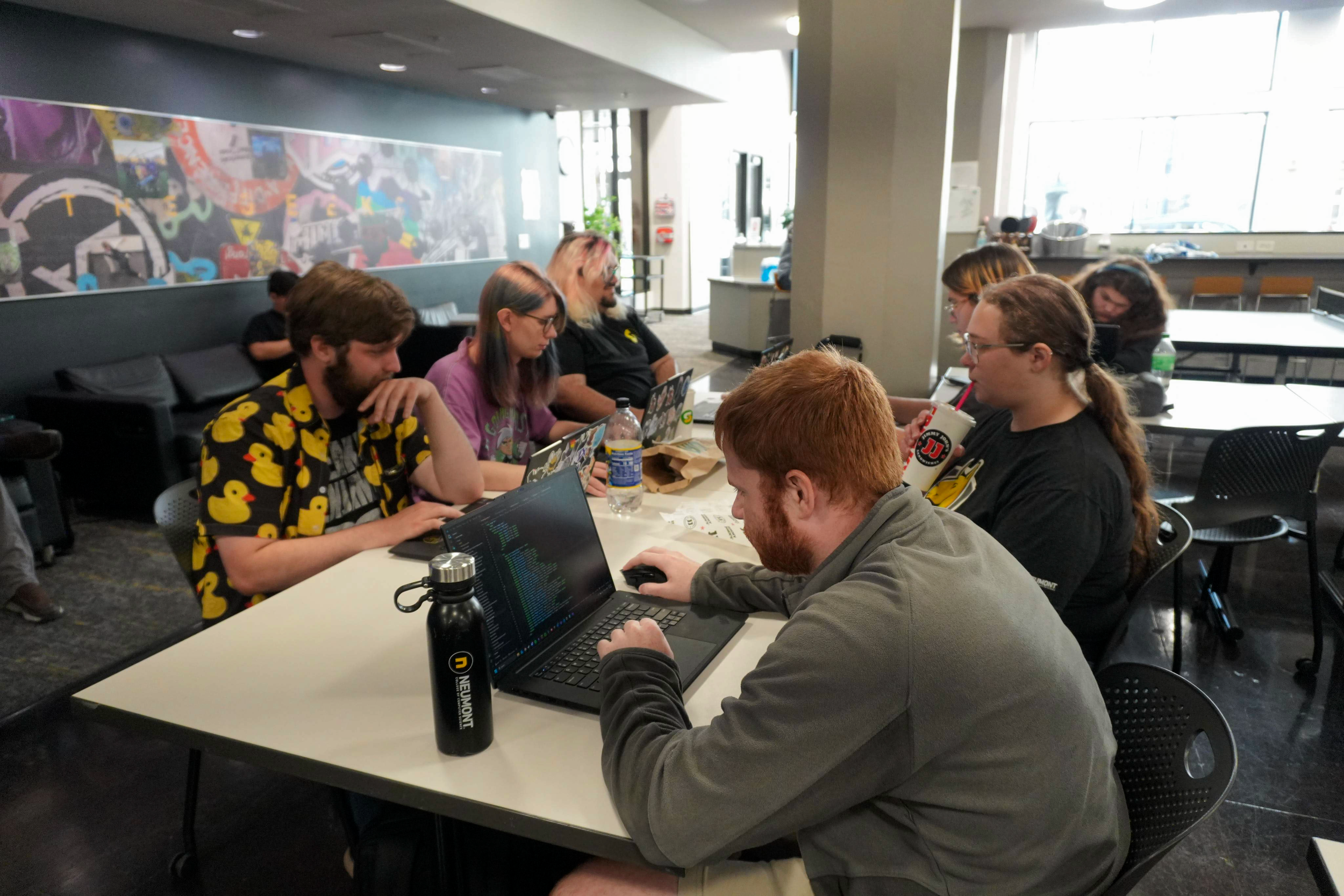
The result was a complete, functional game with no known major bugs, plus a clean sweep. The team already sees opportunities to keep improving Excitoxicity. Based on player feedback, they’d like to balance the game’s difficulty, and would also like to add music, expand the player’s movement options, and create a web version to expand access.
Still, their proudest accomplishment was successfully finishing the game together, and winning was the cherry on top.
“I’m proud we worked as a team, and really just getting this done,” Flanagan said. “Of course I’m also proud of winning every trophy, but really just submitting something to a game jam is a lot to be proud of.”
At Neumont’s Summer Game Jam, students are challenged to work under the same constraints they may encounter in game development careers, such as limited time, changing ideas, and technical challenges. For Jack, Flanagan, and Haroldsen, their winning game was proof that a spontaneous idea, a whiteboard session, and a focused team can turn a stressful weekend into an idea worth celebrating.
Excitoxicity is available to play at the button below.